The Column

Top 5 This Week — Jun 16, 2026

This week’s list is a sweaty collision of Scorsese-style machismo and high-concept ego trips that probably should’ve stayed in the pitch room. We’re bouncing from the literary pretension of Schnabel’s Dante to the unintentional comedy of Tiptoes, proving that a big budget doesn't always buy a lick of sense. It’s a messy spread of aggressive posturing and historical footnotes.

01
In Theaters
In the Hand of Dante

Presence of death/mortality themes · Visual/audio style and production distinctiveness

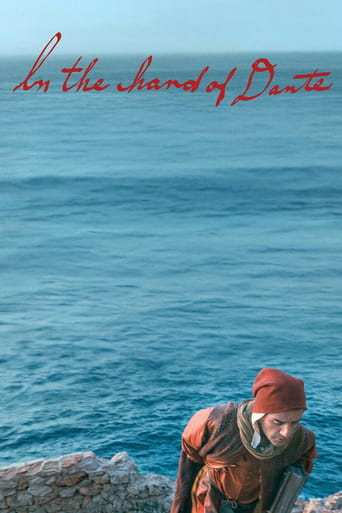
Oscar Isaac stares through a monochromatic lens, looking more like a man waiting for a late bus than a scholar hunting for a lost manuscript. Julian Schnabel’s latest is a "soupy fog" of a film that swaps narrative logic for a "disastrous" display of ego. It tries to be a "gonzo literary gangster movie" but ends up as a "megalomania" project that can't decide if it’s a noir or a period piece. The timelines don't just shift; they collide. Schnabel uses black-and-white to paint the modern world as "brutal and greedy," yet the film itself feels like an expensive, hollow commodity. By the time we reach the "syrupy, bittersweet coda of reincarnation," the movie has looped into a "goofy full circle" that earns none of its intended weight. It’s an "awkward" mess that treats the audience like an afterthought.

Watch this if: You’re a Schnabel completionist who enjoys watching a director set a massive budget on fire. Skip this if: You value your time, coherent storytelling, or the actual Divine Comedy.
02
Streaming
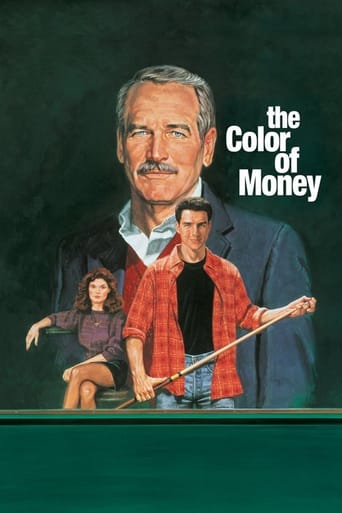
The Color of Money

Emotional potency - how gripping, tense, or edge-of-seat · Weight and complexity of emotions explored

Paul Newman leans over a bar, pitching a kid on how to hustle without looking like a shark. He’s Fast Eddie Felson, but the fire has cooled into a calculation. Scorsese brings a restless, kinetic camera to these smoky halls, turning pool tables into stages for ego. Yet, it’s not an exciting film compared to his heavier hitters. Roger Ebert was right: it lacks the wound-up tension of the director’s best work. It feels like a high-end job where the craft is high but the soul is on loan. Tom Cruise plays Vincent as a frantic, hair-flipping protégé—a performance that often feels like a cartoon. The script by Richard Price stays sharp, maintaining a cynical detachment that avoids sports-movie clichés. It’s an analysis of mentorship and ambition where the teacher is just as hungry as the student. Newman finally got his Oscar here, even if he did better work elsewhere.

Who this is for: Fans of late-era Newman and viewers who enjoy the psychological mechanics of a con.

Who should skip it: Anyone expecting the raw intensity of Taxi Driver or a fast-paced sports flick.

03
Streaming
The Big Cigar

Pacing and activity level - momentum and tempo · Episode/chapter continuity

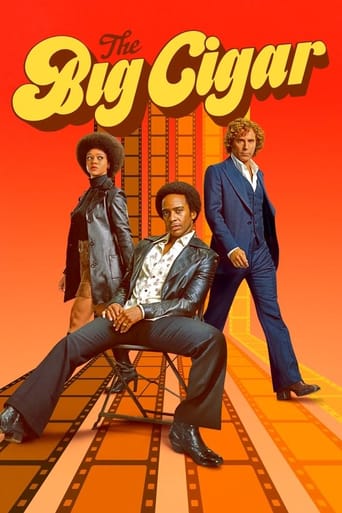
Alessandro Nivola’s Bert Schneider snorts a line, laughs with a Jack Nicholson lookalike, and tries to convince Huey P. Newton that movies can change the world. It is the perfect distillation of The Big Cigar: a show more interested in Hollywood glam than the revolution. The series turns the Black Panther leader’s escape to Cuba into a "supercharged time capsule" that trades political weight for split-screens and funky basslines.

The pacing moves. It is brisk. But the "wearisomely time-hopping" structure makes the stakes feel flimsy. By depicting FBI agents as "Keystone cops in bellbottoms," the drama abandons tension for a cartoonish caper vibe. André Holland does his best with Newton, but the script keeps him at arm's length, centering the white producer’s ego instead. It is a crazier-than-fiction premise that settles for being a high-gloss distraction. It lacks an "unflinching edge."

Who this is for: Fans of fast-paced, stylish 70s heists who value vibe over historical rigor. Who should skip it: Anyone seeking a serious study of the Black Panthers or a drama that doesn't sideline its Black lead.

04
Streaming
Cape Fear

Emotional potency - how gripping, tense, or edge-of-seat · Episode/chapter continuity

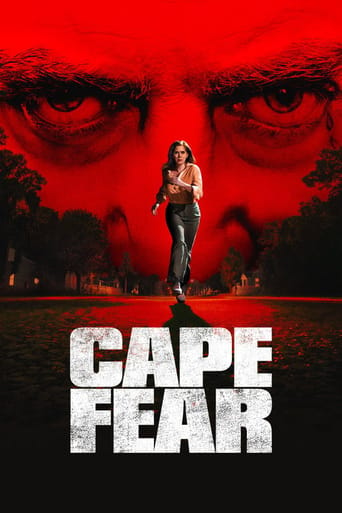
Javier Bardem’s Max Cady stares into a smartphone with more malice than most men bring to a knife fight. It’s a sharp image for a reboot that weaponizes technology against the "self-satisfied" Bowden family. But style only carries a show so far. This version of Cape Fear is a "deliciously overamped" mess that mistakes bloat for importance.

Showrunner Nick Acosta recruits a "murderer’s row" of directors to craft a "sweltering and swanky" Southern Gothic vibe. It looks expensive. It feels heavy. Yet, stretching a tight thriller into a limited series lets the air out of the tires. The "uneven storytelling" creates a drag that even Amy Adams’ panicked performance can’t overcome. It aims for a "grainy, murder-soaked spirit" but lands closer to a glossy, over-long exercise in misery. Bardem plays a "stealthier, more complex predator," but he’s trapped in a narrative that "doesn’t quite stick the landing." It’s all tension with no release, a "preposterously plotted fever dream" that eventually becomes exhausting.

Who it’s for: Bardem completionists and anyone who wants their Southern Gothic served with high-tech paranoia.

Who should skip it: People who value their time and those who prefer the lean efficiency of the original films.

05
Streaming

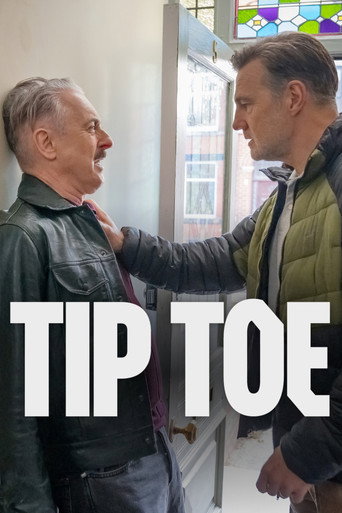
Alan Cumming stands behind a Canal Street bar, all sharp edges and defensive postures, but the air around him feels like a checklist. That’s the core failure of Russell T Davies’ Tip Toe. It tries so hard to deliver a “gut-punching” look at the UK's culture wars that it forgets to be a coherent story. Instead, the narrative dissolves into a “flurry of box-ticking” that turns David Morrissey’s radicalized neighbor into a caricature of internet-poisoned rage.

Davies usually owns the Manchester setting, yet here the “deliciously cruel” edge feels blunt. The script introduces a gender-critical friend just to leave her underdeveloped, making the “openly queer and trans world” feel fragmented rather than lived-in. It is an “alarming, though not inaccurate” depiction of modern hostility, but the non-linear structure acts as a gimmick to mask thin characterization. The show yells for five hours. I’d prefer a conversation.

This is for Davies completionists who need to see everything he writes. Everyone else should skip it if they are tired of being lectured by their television.